How Can SaaS Companies Align Business Continuity Management With SLAs?
In the world of SaaS, uptime is what constitutes trust. Customers don’t just buy or consume software. Rather, they buy reliability, availability, and assurance that services will remain r...
Ascent Business
In the world of SaaS, uptime is what constitutes trust. Customers don’t just buy or consume software. Rather, they buy reliability, availability, and assurance that services will remain ready to access even during disruptions or crises. This trust is made tangible and legal through Service Level Agreements (SLAs). They define performance standards such as uptime, response time, and recovery points. Thus, it is important to align Business Continuity Management with SLAs.
But SLAs are only fake promises unless they are backed by a strong & effective Business Continuity Management (BCM) framework. For SaaS companies, aligning BCM with SLAs is no longer optional. It is a mandate for gaining customer confidence, adhering to regulatory alignment, and maintaining long-term resilience.
This blog highlights how SaaS based organizations can effectively integrate Business Continuity Management with SLAs to enable resilience, transparency, and operational excellence.
What is a SLA?
A service level agreement (SLA) is an agreement between a SaaS-based company and an organization that guarantees a minimum level of service on the provider’s part. There are three types of SLAs: customer, internal, and multi-level service level agreements.
Over time, having an SLA for SaaS applications has become the new norm within the IT outsourcing landscape. As large enterprises have outsourced more IT functions – everything from application hosting to IT help desk support – they have viewed SaaS SLA contracts as mini-insurance policies.
The idea behind SLAs was to “guarantee” that the chosen IT service provider would deliver the promised performance levels within a given time or face penalties (like credits). The “guarantee” would allow the enterprise to focus its attention and internal resources on other value-added areas rather than on IT service level management.
Understanding the Relationship Between BCM and SLAs
SLAs highlight what customers expect during normal operations and disruptive events. BCM, on the other hand, defines how the organization will deliver on those expectations in the event of disruptions.
In simple terms:
SLAs define the “what” (uptime, recovery time, support response, recovery point).
BCM defines the “how” (processes, people, technology, and recovery strategies).
Without alignment, SaaS-based companies risk SLA breaches, financial penalties, reputational damage, and customer churn.
Why SLA–BCM Alignment Is Critical for SaaS Companies
1. High Dependency on Always-On Services
SaaS platforms and organizations function in a 24/7 environment. Even brief disruptions can affect a huge number of customers at the same time, making continuity planning crucial.
2. Agreement-Based and Financial Risks
The violations in SLA frequently result in service credits, penalties, or contract termination. Business Continuity Management makes sure that the recovery capacity meets SLA expectations & contractual commitments.
3. Customer Trust and Retention
Customers evaluate SaaS providers based on reliability and dependency. An effective BCM program reasserts that the provider can handle disruptions and therefore creates confidence amongst the customers.
4. Regulatory Expectations
Many SaaS companies serve strictly regulated sectors such as finance, healthcare, fintech, etc., where business continuity, resilience, minimum downtime, and 24/7 availability are non-negotiable.
Key SLA Metrics That BCM Must Support
To align BCM with SLAs, SaaS companies must first map out continuity capabilities to SLA commitments, including:
Uptime (e.g., 99.9%, 99.99%)
Recovery Time Objective (RTO) – How fast the services must be restored
Recovery Point Objective (RPO) – Acceptable data loss
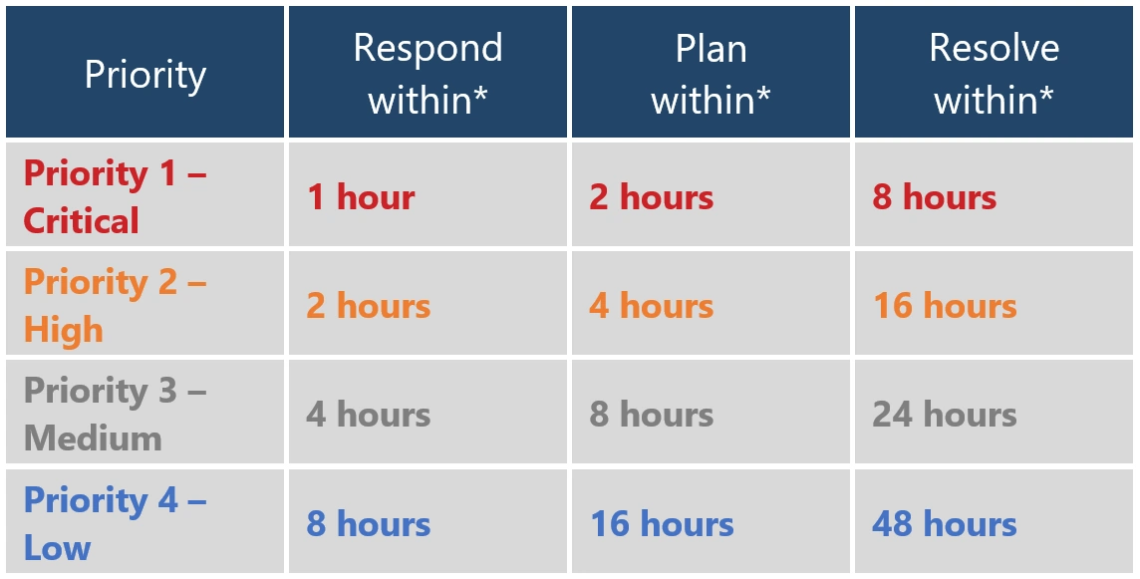
Incident Response Time
Customer Communication Timelines
BCM strategies should be designed strategically to meet or exceed these measurable criteria.
How SaaS Companies Can Align Business Continuity Management With SLAs
1. Align SLAs with Business Impact Analysis (BIA)
A Business Impact Analysis should not be conducted in isolation and in a vacuum. SaaS organizations must:
Recognize SLA-bound services
Assess financial, operational, and reputational consequences & penalties of SLA breaches
Prioritize systems and processes based on SLA criticality
This procedure makes sure that the most customer-facing and revenue-affecting services receive the highest business continuity spotlight.
2. Define RTOs and RPOs Based on SLA Commitments
SLAs are meant to describe recovery expectations. On the other hand, BCM plans must:
Translate SLA uptime requirements into attainable RTO and RPO targets
Ensure infrastructure, backups, and recovery strategies can realistically meet those goals
Avoid overpromising SLAs that BCM capabilities cannot support
Alignment prevents the common pitfall of aggressive SLAs backed by weak recovery capabilities.
3. Build Resilient Architecture to Support SLAs
Technology resilience is the backbone of SLA fulfillment. SaaS BCM strategies should include:
Multi-region or multi-cloud deployments
Automated failover and redundancy
Regular data backups and recovery validation
Cyber resilience measures against ransomware and outages
BCM should work closely with DevOps, SRE, and cloud teams to make sure architectural decisions support SLA obligations.
4. Align Incident Response and Communication Plans
SLAs tend to highlight how quickly customers must be informed during incidents. At the same time, Business Continuity Management should enable:
Clearly defined incident escalation paths
Pre-approved customer communication templates
Alignment between technical recovery and customer-facing updates
Transparent and timely communication can significantly reduce the impact of SLA breaches on customer trust.
5. Include Third-Party and Vendor Risks in BCM
SaaS companies depend heavily on cloud providers, APIs, and third-party tools. Vendor failures and other BCM risks can directly affect SLA performance.
BCM programs should:
Assess vendor continuity capabilities
Align vendor SLAs with customer SLAs
Define fallback and exit strategies for critical providers
Strong vendor continuity planning prevents third parties from becoming weak links.
6. Regularly Test BCM Against SLA Scenarios
BCM plans must be tested and trained against real SLA-driven scenarios, such as:
Major platform outages
Data center failures
Cyber incidents
Sudden traffic spikes
Testing should validate whether recovery times, communication processes, and support workflows truly meet SLA commitments.
7. Continuously Review SLAs as the Business Evolves
As SaaS platforms grow and become bigger, SLAs become even more demanding. Therefore, BCM must evolve alongside:
New product launches
Geographic expansion
Customer growth
Regulatory changes
Regular alignment reviews between legal, customer success, IT, and risk teams ensure SLAs remain practical and attainable.
Benefits of Aligning Business Continuity Management With SLAs
When BCM and SLAs are tightly aligned, SaaS companies gain:
Reduced risk of SLA breaches
Faster and more predictable recovery
Higher customer confidence and retention
Stronger audit and compliance posture
Improved operational resilience
More importantly, continuity becomes a competitive advantage, not just a compliance requirement.
Do you want to move from “recovering after a crisis” to “predicting and preventing impact”? Learn how AI is redefining continuity in banks.
Conclusion
For SaaS based companies, SLAs are big fat promises made to customers. But, Business Continuity Management is what makes those promises credible and authentic. Aligning Business Continuity Management with SLAs makes sure that recovery capabilities, technology resilience, and response processes are built around real and practical consumer expectations making them credible.
In an ecosystem where downtime directly translates to lost brand reputation and revenue, SaaS organizations that integrate BCM into their SLA strategy are far better equipped to face crises, protect customers, and move ahead with confidence.
Resilience isn’t just about surviving outages. Rather, it’s about consistently delivering on your commitments.
Schedule a free consultancy now to learn how Ascent enables SaaS leaders to meet SLAs, reduce downtime, and protect customer trust.