How a Leading Regulator Transformed Business Continuity Management with AutoBCM
A leading national regulator which safeguards the public, workers, and environment from nuclear and radiation risks transformed its Business Continuity Management with autoBCM. Recognized b...
Ascent Business
A leading national regulator which safeguards the public, workers, and environment from nuclear and radiation risks transformed its Business Continuity Management with autoBCM. Recognized by the world for its regulatory competence and its collaboration with energy agencies, it oversees critical national infrastructure. Thus, resilience, operational integrity, and regulatory compliance are essential for its core functions.
For achieving resilience and modernizing its business continuity processes, the organization wanted to replace its manual, spreadsheet-driven BCMS with a centralized, intelligent platform capable of improving visibility, coordination, and compliance. It collaborated with AutoBCM, enabling a streamlined, data-driven, and audit-ready continuity framework.
Overcoming Operational Inefficiencies & Risk Blind Spots Through Ascent’s Business Continuity Management
Before partnering with Ascent, the organization managed its BCMS through siloed processes and spreadsheets. This created significant challenges:
• Manual and Spreadsheet-Driven BCMS
The BCMS data of the organization was maintained manually across spreadsheets. This resulted in inconsistent data handling, duplication, and time-taking efforts.
• Scattered Data & Limited Visibility
Without a centralized platform, real-time monitoring was difficult. This made the process of assessing risks slow and inefficient.
• Inefficient Approvals & Delays
The critical processes were dependent on email-based approvals. This led to bottlenecks and delayed decision-making.
• Lack of Coordination Across Teams
There were communication gaps across departments and jurisdictions. This in turn led to the weakening of response capacity during a crisis.
• Difficulty Identifying Critical Processes
There were unstructured insights, which made it difficult to prioritize & track high-impact business functions and dependencies.
Amidst this chaos, the organization recognized the importance of a unified, modern BCM solution. This led to the collaboration between the organization & Ascent’s AutoBCM to drive visibility, efficiency, and resilience.
The Transformation Journey: Centralizing Business Continuity Management for Better Governance
The organization’s end goal was to establish a consistent, centralized continuity and resilience framework aligned with global regulatory standards such as ISO 22301. With the help of Ascent, they deployed AutoBCM across departments to modernize workflows, standardize processes, and empower response capabilities.
A key driver for change was the need to improve strategic alignment, ensure readiness for regulatory reviews, and link business continuity decisions to risks, dependencies, and operational realities.
The Solution: Enhanced Risk Insights & Seamless Compliance
AutoBCM enabled them to establish an integrated, end-to-end continuity framework. AutoBCM used advanced risk intelligence, automated workflows, and real-time monitoring to move from silos to integration.
1. End-to-End Business Continuity Management Lifecycle Implementation
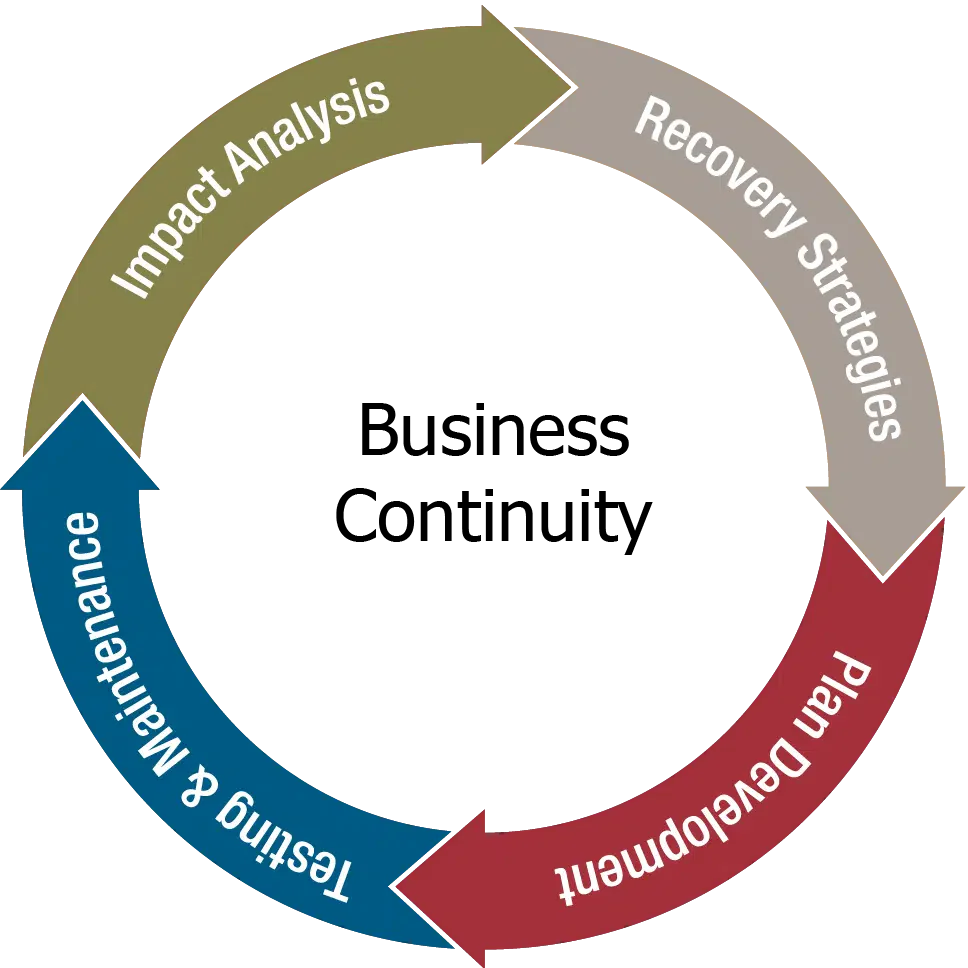
AutoBCM helped to deliver a complete business continuity lifecycle. From planning to testing and governance, everything was executed, which guaranteed consistency and audit readiness.
2. Operational Efficiency & Visibility
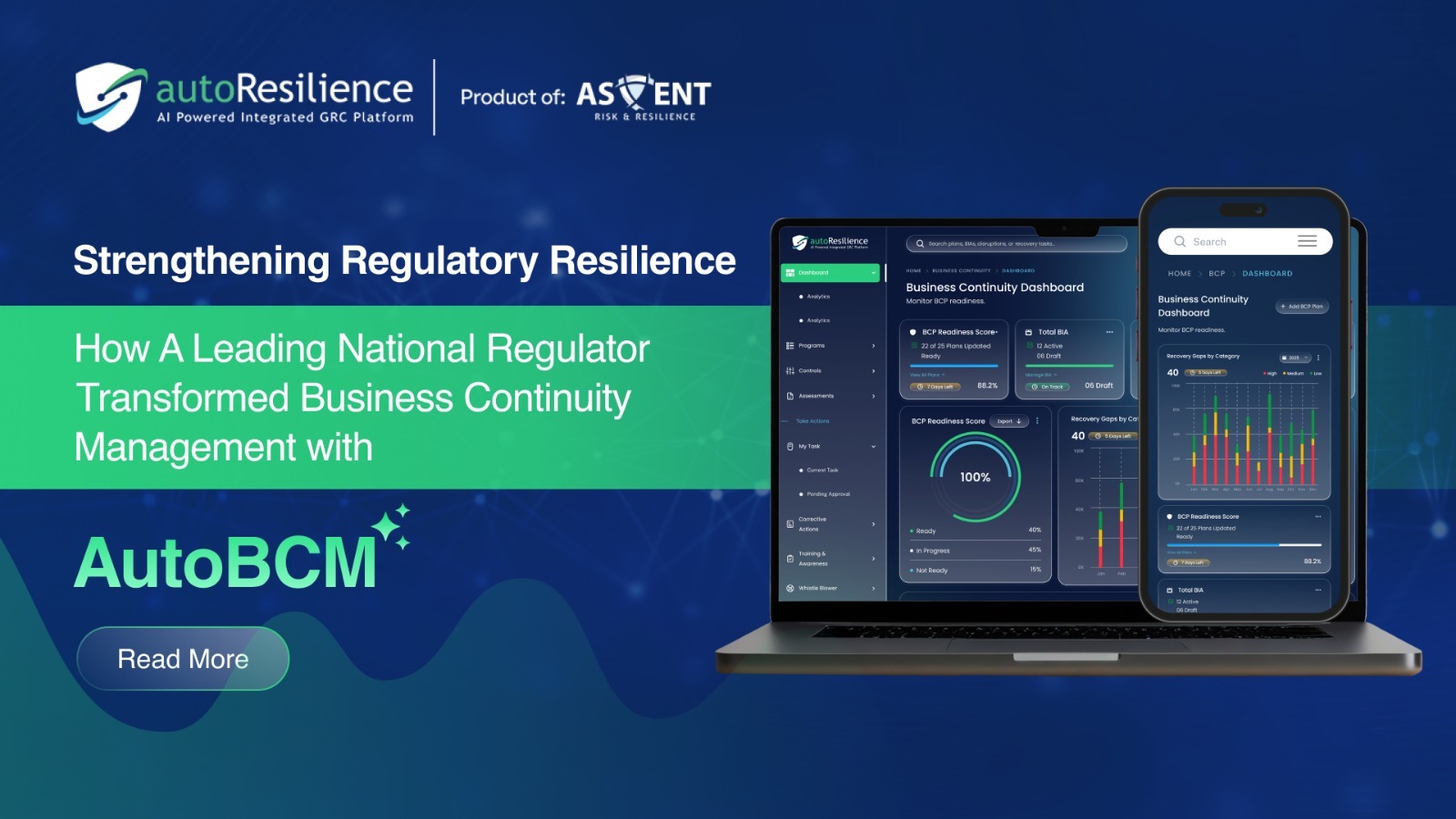
The AutoBCM application provided the leadership with a centralized dashboard. This unified dashboard enhanced real-time event monitoring, decision-making, and risk tracking.
3. Disaster Recovery Planning & Crisis Management
The software also helped in streamlining disaster recovery frameworks and introduced structured crisis management processes for faster response and service continuity.
4. Automated Dashboards & Reporting
Automated & centralized dashboards provided a substantial view of risks, recovery readiness, resource dependencies, and compliance metrics.
5. Strengthened BCM Awareness
Huge number of notifications were used to disseminate updates, training reminders, and alerts. This ensured organization-wide preparedness.
6. Effective Issue Tracking & Resolution
Enabled structured issue recording, tracking, and closure, supporting continuous improvement across the BCM cycle.
Objectives
Aligned to its long-term resilience strategy, the organization’s goal was to:
Standardize business continuity practices across departments
Improve real-time visibility into risks, dependencies, and operational readiness
Break down silos and centralize BCM activities under one integrated platform
Enhance communication, coordination, and crisis awareness
Strengthen compliance alignment with international standards
Ensure resilient service delivery and regulatory responsiveness
Results of the Collaboration
A key focus of the client’s transformation was building a single source of truth for all BCM-related data. With Ascent’s AutoBCM, they established:
A unified continuity taxonomy
Unified repositories for functions, processes, resources, risks, RTO/RPO, and recovery strategies
Cross-departmental linkages between processes and dependencies
Operational Success
• Real-time visibility and automated notifications and alerts enhanced organizational agility, which led to faster crisis handling.
• With the collaboration, the organization was able to save 33% of operational costs. It was able to eliminate manual processes and optimize the workflows.
• AutoBCM made automated alignment with ISO standards and regulatory expectations possible.
• Analytics and predictive risk insights helped mitigate exposure and strengthen preparedness. This proactiveness led to a reduction in financial costs and reputational damage.
• Identification of gaps between BCM requirements and resource availability was made clear.
• Automated messaging and chat capabilities ensured 24×7 incident engagement.
Business Continuity & Resilience Strengthened
With AutoBCM, the organization established a resilient continuity ecosystem supported by:
Advanced analytics
Consistent BCM methodologies
Integrated crisis and incident management
Automated audit trails
Cross-functional visibility
Moreover, these improvements translated into streamlined processes, reduced operational issues, and enhanced responsiveness. These are critical for a national nuclear regulator.
Conclusion
Their partnership with Ascent represents a significant leap forward in modernizing business continuity management and strengthening regulatory resilience. By centralizing data, automating workflows, and establishing a unified resilience framework, they have reduced operational inefficiencies, enhanced compliance, and improved crisis response capabilities.
Therefore, with accurate insights, standardized processes, and real-time visibility, the customer is now better equipped to deliver on its mission of protecting people, infrastructure, and the environment while ensuring operational continuity in a complex and high-stakes regulatory landscape.