Why Organizations need Automated Compliance Management in Saudi Arabia and UAE in 2026
Organizations that operate in Saudi Arabia and the United Arab Emirates (UAE) are assumed to face an increasingly complex regulatory, digital, and risk landscape. As both nations pursue amb...
Ascent Business
Organizations that operate in Saudi Arabia and the United Arab Emirates (UAE) are assumed to face an increasingly complex regulatory, digital, and risk landscape. As both nations pursue ambitious economic diversification and digital transformation agendas, including Saudi Vision 2030 and the UAE’s digital economy strategies, compliance rapidly evolves from a back-office checkbox exercise to a strategic imperative. This transformation is driven by new laws, stricter financial oversight, advanced digital expectations, and the coming up of new technologies like AI-powered RegTech and automated governance platforms. As a result, automated compliance management systems in Saudi Arabia & the UAE are becoming indispensable rather than optional for organizations across industries.
In this blog, we’ll understand why automation is crucial for compliance success in 2026. Also, how it goes ahead to support strategic business goals, and what challenges would organizations in the Saudi and UAE markets face before future-proofing their compliance frameworks.
Compliance Management in Saudi Arabia & the UAE
Before discussing automation, it’s important to understand what compliance entails in these markets, especially as regulations keep changing rapidly.
1. A Shift Towards Proactive Regulation
Regulatory frameworks in the GCC are no longer rigid and stagnant index. Risk-based oversight, answerability, and proactive decisions are emphasized by regulators and authorities like the Saudi Central Bank (SAMA), Dubai Financial Services Authority (DFSA), Abu Dhabi Global Market (ADGM), and UAE’s Federal regulators. This shift is in total sync with global market trends where regulators expect proactive continuous compliance and risk resolution in real time rather than routine audits or reactive reporting.
2. Data Protection and Digital Trust Expectations
Modern data protection laws are introduced by both Saudi Arabia and the UAE that are in sync with global standards. This regulatory edge represents a bold and wide local level commitment to data privacy, digital trust, and secure digital economy goals. These ultimate goals cannot be easily acquired through manual compliance processes.
3. Rapid Innovation in AI and Digital Services
Saudi Arabia and the UAE are the flagbearers of national AI strategies. They invest heavily in Artificial Intelligence to transform government services, financial institutions, and digital landscapes. With innovation comes ethical, security, and fairness risks, which force regulators to introduce frameworks that monitor AI performance and prevent harmful consequences.
These developments mean that organizations increasingly need governance, risk, and compliance (GRC) automation that can help them stay in motion with technical and regulatory difficulty.
Why Manual Compliance Is No Longer Sufficient
Manual compliance methods traditionally rely on spreadsheets, human-resource dependent processes, and routine audits. While the traditional approach may have been accessible and convenient in simpler environments, but it cannot support the scale and speed of this new era’s ever changing regulatory demands. Here’s why:
1. Speed & Scale of Regulatory Change
Regulations are introduced and updated at an enormous speed and scale in Saudi Arabia and the UAE. This increased number of regulations makes tracking manually almost impossible. Whether it’s financial reporting, anti-money-laundering (AML) guidelines, data protection, or AI governance rules, organizations have to adapt to constant changes and apply them continuously. This repetition of tasks is something that tends to burden human compliance teams.
Therefore, manual methods fail in keeping up with the constant changes, which leads to risk exposure and regulatory violations.
2. Human Error
Data entry errors, oversight, and inconsistent rule application are some of the common mistakes in manual workflows. Manual processes also struggle to aggregate data across multiple systems, departments, and geographies which becomes a huge problem for enterprises operating across both Saudi and the UAE markets.
Automation removes repetitive, very mistake-prone tasks. This maintains consistent, precise and accurate compliance monitoring with the least human intervention. Thus, it helps in more accountable reporting and in-depth visibility into risk exposure.
3. Lack of Real-Time Monitoring
Modern regulators expect dynamic compliance. This means that enterprises must reciprocate subtly to risk signals and not just wait for quarterly or annual audit reports. Traditional systems lack real-time notification system and predictive risk analytics. This leaves companies totally blind to upcoming issues until it’s too late.
Automated compliance management tools with real-time dashboards, alerts, and analytics close this visibility gap and allow proactive decision-making and governance.
What Automated Compliance Management Offers to UAE & Saudi Arabia in 2026
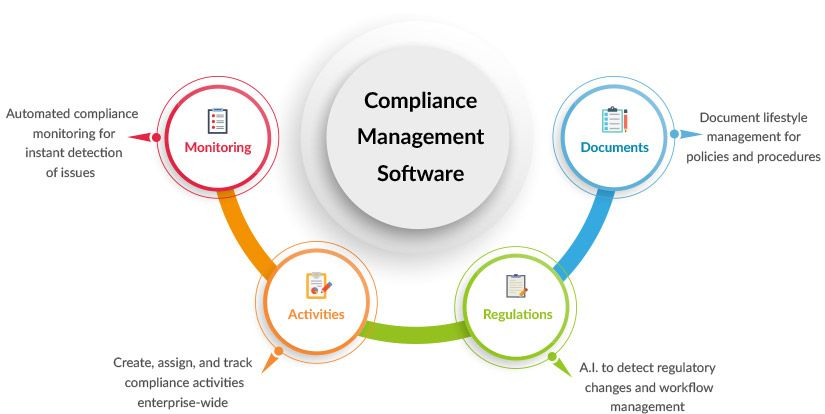
Automated compliance management systems integrate technology including AI, machine learning, cloud computing, and predictive analytics to streamline compliance across governance, risk, and regulatory reporting functions. Here’s what automation can deliver for Saudi and UAE organizations:
1. Real-Time Regulatory Mapping
Automated platforms can adapt to new regulatory requirements and update internal compliance frameworks in a few seconds. This means organizations can stay aligned & in sync with local regulators such as SAMA, the UAE Central Bank, etc without maintaining any kind of manual trackers.
This capacity is especially crucial in the GCC, where regulatory landscapes tend to change often, and compliance expectations multiply faster than new AI updates.
2. AI-Driven Monitoring & Notifications
AI and machine learning models strengthen systems to keep an eye on the transactions, configurations, data access patterns, and other activities continuously. For example, automated AML and KYC systems can detect any anomaly and bring forth risk notifications way faster than any human analyst.
Unlike manual checks that are performed weekly or monthly, AI-driven monitoring and mapping works 24/7, which enables proactive intervention and risk resolution promptly.
3. Risk Assessment and Predictive Analytics
Automated tools are more than just about reporting compliance. They tend to predict and foresee where risks come out based on historical behavior, external signals, and trends. In a region which faces rapid digital transformation, predictive insights help enterprises forecast issues before they become compliance failures and lead to hefty fines.
Organizations allot resources more efficiently by prioritizing high risk areas. This increases overall risk stature without increasing the cost at an overall level.
4. Unified Data Repository
Centralization is the backbone of an impactful governance in multi-jurisdiction environments like the Saudi and the UAE markets. Automated compliance systems collect data from separate sources, ERP, CRM, financial systems, HR, and security logs, and bring them into a unified platform.
This not only improves audit preparedness but also enables convenient traceability of important compliance actions. Thus, providing regulators with clarity and uniformity in evidence when needed.
5. Scalability as Businesses Grow
Compliance needs grow extremely fast. As organizations based in Saudi and UAE pursue expansion, whether into fintech, healthcare, energy, or AI services. The manual compliance burden grows simultaneously. Automation increases with the business, ensuring that new products, services, and markets can be governed consistently without any manual effort.
6. Reduction in Cost and Operational Burden
Contradictory to earlier perceptions that automation is costly, the long-term cost savings are pleasingly appealing. Automated systems cut down the need for large compliance teams. It cuts the need for manual processing and thus frees up expert talent and valuable human resource for strategic governance planning. Many organizations also find that automation eliminates compliance costs by up to 30–50% while increasing accuracy and speed.
Regulatory Drivers for Automation in Saudi Arabia & UAE
Automation isn’t simply a technological preference. It is widely becoming a regulatory necessity or de-facto standard across industries & geographies.
1. Advanced Financial Compliance Requirements
Strong AML, KYC, and counter-terrorist financing frameworks are being pushed by nations like Saudi Arabia and the UAE. The automation tools like autoResilience.ai help institutions comply with real-time transaction monitoring, identity verification, and anomaly reporting, which are expected by regulators in high-risk industries.
Alternatively, manual compliance in such environments risks significant fines and reputational harm.
2. Data Protection and Residency Obligations
With stringent data protection rules and expectations in the GCC, organizations have to demonstrate data governance practices that manual processes cannot support with reliability. Cloud-based compliance platforms provide encryption, secure audit logs, and evidence of compliance enforcement, which regulators increasingly expect.
3. AI Governance and Ethical Standards
In markets where AI adoption is moving forward rapidly, regulators are introducing ethical and audit-ready governance requirements.
Automated compliance platforms can maintain these records continuously and support governance frameworks around emerging technologies like AI.
Challenges in Successful Adoption of Automated Compliance Management in Saudi Arabia & UAE
Adopting automated compliance solutions does not come without problems of its own.
1. Implementation Costs
The initial implementation of automated compliance systems costs dearly but it provides strong long-term ROI.
2. Skills & Change Management
Understanding both compliance and technology are essential when automated compliance comes into the picture. For this, trained personnel are needed. The regional skills have a gap in AI and trained professionals have to be there to adapt to the automated system.
3. Integration with Legacy Systems
Moving from siloed systems to unified automated platforms requires careful planning and change management. Seamless and convenient integration and synchronization with existing business systems like ERP and CRM is essential for accurate compliance monitoring.
Conclusion
For organizations based out of Saudi Arabia and the UAE, compliance automation in 2026 is not a luxury. It is a strategic requirement. Regulations are becoming more stringent, digital transformation is accelerating, and regulators are anticipating real-time governance and therefore manual methods fail to keep up.
AutoResilience compliance systems help strengthen organizations with their insights, accuracy, scalability, and risk-based governance. These are all essential parts of competitive & resilient businesses in this new and digital era. Whether operating in any of the industries, be it finance, healthcare, technology, or government services, investing in compliance automation is now mandatory for survival and thriving in the ever-changing regulatory ecosystem of Saudi Arabia and the UAE.